Articolo su rivista pubblicato in Agriculture, volume 15, pp. 1988–1988.
Autori: .
Abstract
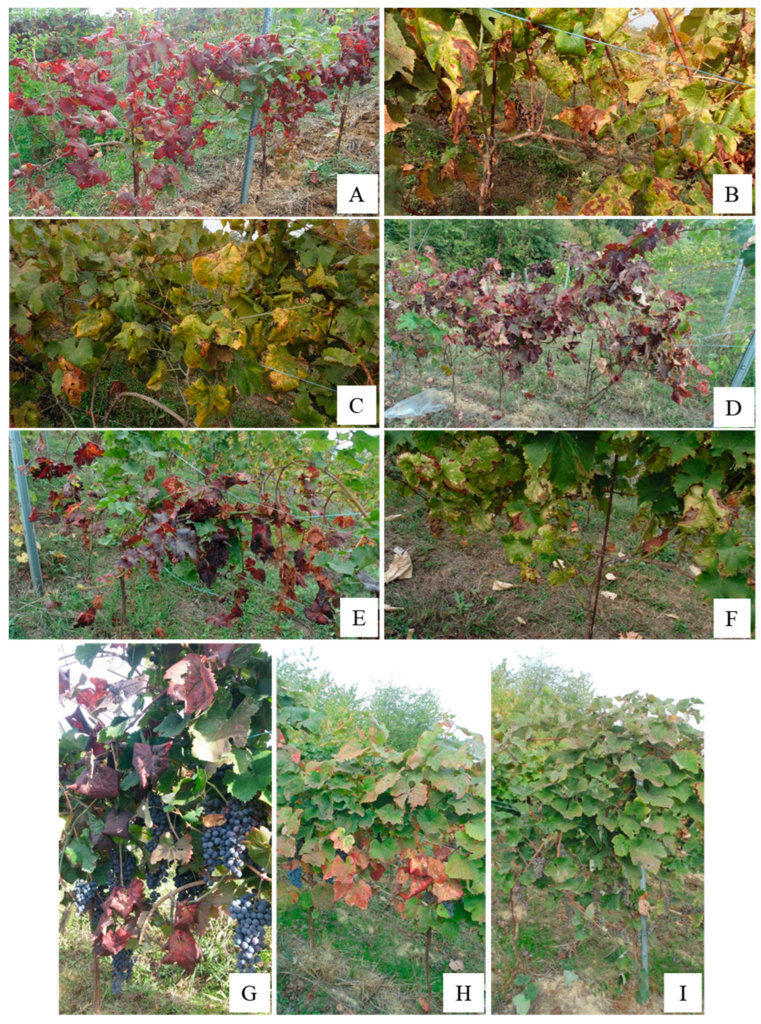
In Europe, Flavescence dorée (FD), the only epidemic disease within the phytoplasma-associated grapevine yellows complex (GY), reduces productivity and has a negative impact on berry composition and wine quality. Recent studies have shown that Georgian Vitis vinifera L. varieties have low susceptibility to Bois noir (BN), another GY disease. This study investigated the performance of some Georgian grapevine varieties in a highly FD-affected area in Piedmont (northwestern Italy), exploring their susceptibility to FD and testing their oenological potential through berry and wine quality analyses. Activities, conducted in a case-study vineyard containing central–western European, Georgian, and PIWI (fungus-resistant grape varieties) varieties, included field surveys and molecular analyses. Mortality and infection percentage index were significantly higher in Georgian and central–western European varieties, respectively. All Georgian varieties exhibited none or mild symptoms without a reduction in the number of symptomless berries. Only the FD phytoplasma (FDp) genotype M54 was identified in infected grapevines, suggesting that differences in symptom severity were related to a variety-specific response to infection. Despite infection, Georgian varieties maintained stable berry and wine quality parameters, showing no significant changes in acidity, sugar content, and flavor profile. Thus, Georgian varieties had great oenological potential and responded well to both FDp infection and local agroecosystem conditions.
Parole chiave grapevine yellows, oenological potential, map gene
codice BibTeX: clicca per mostrare
@article{
	2318_2095610,
	url = {https://hdl.handle.net/2318/2095610},
	author = {Portaccio, Letizia and Paissoni, Maria Alessandra and Giacosa, Simone and Passera, Alessandro and Barbieri, Camilla and Maghradze, David and Rolle, Luca and Gerbi, Vincenzo and Failla, Osvaldo and Bianco, Piero Attilio and Quaglino, Fabio},
	title = {Performance of Georgian grapevine varieties in a vineyard infected by Flavescence dorée phytoplasma in Piedmont, northwestern Italy},
	year = {2025},
	journal = {Agriculture},
	volume = {15},
	abstract = {In Europe, Flavescence dorée (FD), the only epidemic disease within the phytoplasma-associated grapevine yellows complex (GY), reduces productivity and has a negative impact on berry composition and wine quality. Recent studies have shown that Georgian Vitis vinifera L. varieties have low susceptibility to Bois noir (BN), another GY disease. This study investigated the performance of some Georgian grapevine varieties in a highly FD-affected area in Piedmont (northwestern Italy), exploring their susceptibility to FD and testing their oenological potential through berry and wine quality analyses. Activities, conducted in a case-study vineyard containing central–western European, Georgian, and PIWI (fungus-resistant grape varieties) varieties, included field surveys and molecular analyses. Mortality and infection percentage index were significantly higher in Georgian and central–western European varieties, respectively. All Georgian varieties exhibited none or mild symptoms without a reduction in the number of symptomless berries. Only the FD phytoplasma (FDp) genotype M54 was identified in infected grapevines, suggesting that differences in symptom severity were related to a variety-specific response to infection. Despite infection, Georgian varieties maintained stable berry and wine quality parameters, showing no significant changes in acidity, sugar content, and flavor profile. Thus, Georgian varieties had great oenological potential and responded well to both FDp infection and local agroecosystem conditions.},
	keywords = {grapevine yellows, oenological potential, map gene},
	doi = {10.3390/agriculture15181988},
	pages = {1988--1988},
	number = {18}
}
Disponibilità della pubblicazione
Open access
Il file è disponibile in versione ad accesso aperto. È quindi possibile scaricarlo e diffonderlo secondo le limitazioni espresse nella licenza.
Visualizza o richiedi la pubblicazione
È possibile trovare la versione postprint dell’articolo nell’archivio istituzionale dell’Università di Torino
IRIS-AperTO record 2318/2095610
Consulta la versione finale presso l’editore:
doi:10.3390/agriculture15181988
File non disponibile? Servono informazioni?
Puoi contattarmi e richiedere il documento attraverso il seguente modulo: